The cost of innovation: how economics shapes the future of Brazilian startups
Technology is not just software. It is a tool of economic transformation, and that logic is what drives how RBX builds Strategos.
The sudden appearance of new combinations, swarm-like in nature, easily and necessarily explains the fundamental features of periods of accelerated growth.
Joseph Alois Schumpeter
For decades, technology was treated as a set of tools meant to automate tasks, cut operating costs, and increase business productivity. That definition made sense for much of the digital revolution, when computerizing processes was, on its own, a competitive advantage.
Today, that view has become insufficient.
In the contemporary economy, technology has stopped being just operational support and taken on a much deeper role: it now reorganizes markets, alters cost structures, changes consumption patterns, and redefines how companies create value. Software, artificial intelligence, data, and cloud computing are not merely technological advances; they are instruments capable of transforming the economic dynamics of entire industries.
That shift explains why the world's most valuable companies no longer concentrate their wealth in physical assets such as factories, machines, or large industrial facilities. Their main assets are intangible: algorithms, data, intellectual property, digital platforms, and highly skilled human capital.
In this context, an inevitable question emerges: why do some countries manage to produce technology companies that transform global markets, while others remain consumers of these innovations?
This question is particularly relevant for Brazil. The country has a sizable consumer market, a sophisticated financial system, excellent universities, and a growing entrepreneurial ecosystem. Even so, it produces relatively few startups capable of competing at international scale.
The most common explanation attributes this to a lack of investment, bureaucracy, or tax burden. While those factors matter, they do not tell the whole story.
At RBX, we believe the real challenge lies in understanding technology as an economic phenomenon. Before writing software, one needs to understand how companies compete, how capital gets allocated, what incentives guide investors, and how macroeconomic decisions shape the capacity to innovate.
In other words, technology does not transform companies on its own. It transforms the way economic resources are organized.
That is precisely why startups do not compete like traditional companies. They operate under a different logic, one based less on accumulating physical assets and more on the ability to convert knowledge into scale, data into competitive advantage, and innovation into exponential growth.
Understanding that difference is the first step to understanding why some companies manage to redefine entire markets while others stay limited by business models built for an economy that no longer exists.
Chapter 1: The firm changed. So did the economy.
For more than a century, economic theory described the firm as an organization whose output depended mainly on combining physical capital and labor. Machines, facilities, equipment, and workers were the factors responsible for generating wealth.
That model still holds for much of the industrial economy. But it explains only part of how the companies leading the digital economy actually operate.
A software startup does not increase its production capacity by buying more machines. An artificial intelligence company does not build competitive advantage by constructing new factories. Its growth depends on entirely different factors: talent, data, computing power, algorithms, and network effects.
In other words, the nature of the firm has changed.
Today, the most valuable asset of many companies cannot be stored in a warehouse or shipped in a truck. It lies in the capacity to turn information into decisions, processes into automation, and knowledge into productivity.
That shift profoundly changes the logic of competition.
While industrial companies grow by adding physical capacity, startups grow by expanding their ability to process information, learn from their users, and scale solutions at extremely low marginal cost. That is what allows a digital company to serve millions of customers without expanding its structure at the same rate.
The result is a new form of economic competition. Producing more is not enough. Companies need to learn faster, adapt continuously, and build advantages that depend not just on tangible assets, but on the ability to organize knowledge and turn that knowledge into value.
This new logic raises the next question: if startups do not compete like traditional companies, what forces actually determine their success?
Chapter 2: Smart capital: why technology without strategy does not create value
For a long time, innovating was thought to mean developing new technologies. Today, that idea is no longer enough.
In the digital economy, technology on its own stopped being a differentiator. Frameworks, artificial intelligence models, cloud infrastructure, and development tools have become increasingly accessible. The real competitive edge is not owning technology, but using it to solve economically relevant problems.
That distinction is fundamental.
A company can invest millions in artificial intelligence and still destroy value if it automates inefficient processes or produces information that does not change decision making. Conversely, a technologically simple solution can generate enormous competitive advantage when it cuts waste, improves resource allocation, and speeds up decisions.
In other words, innovation is not an engineering problem. It is an economics problem.
At RBX, this understanding guides everything about how we build technology. Before asking "which algorithm should we use?", we ask a more important question: which decision needs to get better?
Companies do not compete on how much data they store. They compete on their capacity to turn information into action.
That is one of the biggest challenges logistics companies face. Most already hold enormous amounts of data spread across ERPs, transportation systems, tracking platforms, sensors, spreadsheets, and operational reports. The problem is not a lack of information; it is its fragmentation.
When every system answers only part of the problem, management ends up depending on managers' individual experience, long meetings, and decisions made under pressure.
The cost of that fragmentation rarely shows up on the balance sheet, but it is present every day: delays, idle vehicles, inefficient routes, higher fuel consumption, communication failures, lost productivity, and missed opportunities.
This is exactly the context in which Strategos emerges.
Built by Merovelis and incorporated into RBX's technology vision, Strategos was designed as an Intelligent Situation Room for mid-sized logistics companies and critical operations. Its role is not to replace existing systems, but to connect them into a single environment of operational intelligence.
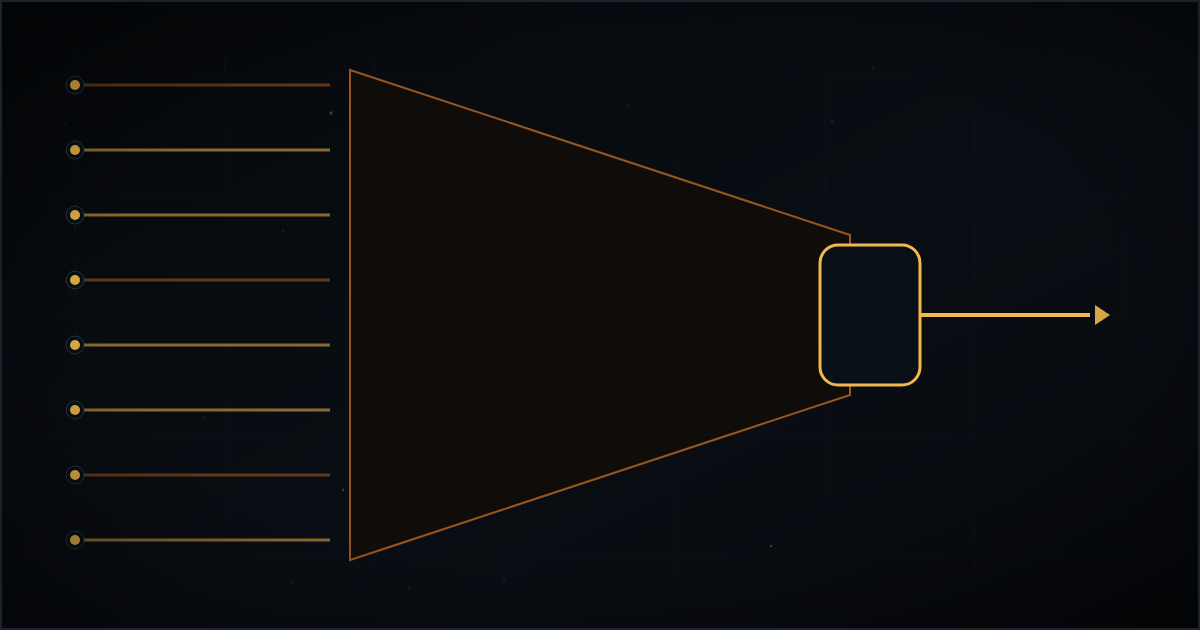
By integrating data that already exists, applying artificial intelligence, and presenting scenarios clearly, Strategos turns large volumes of information into fast, auditable, and economically grounded decisions.
The point is not just to show indicators. It is to answer the questions that actually matter for the business:
- Where is the biggest operational risk right now?
- Which decision cuts the most cost without compromising service level?
- Which events demand immediate action?
- How should scarce resources be prioritized across multiple simultaneous problems?
When technology starts answering economic questions instead of just generating dashboards, it stops being a cost center and becomes a strategic asset.
This is the kind of innovation we believe the next generation of Brazilian companies needs. Not innovation based purely on code, but on the ability to continuously improve the quality of decisions.
Chapter 3: The future belongs to companies that decide better
There is a common perception that artificial intelligence will replace people. The reality tends to be more complex.
Just as electricity did not eliminate workers but profoundly transformed how things were produced, artificial intelligence does not replace management. It redefines the quality of decisions managers are able to make.
Over the next decade, a company's main competitive advantage will probably not be owning more assets, hiring more people, or expanding physical infrastructure. It will be deciding better, deciding faster, and deciding with greater consistency.
That shift has already begun.
Markets have become more dynamic, supply chains more complex, and consumers more demanding. In environments like these, the time between noticing a problem and acting on it has become one of the main factors of competitiveness.
Companies that rely exclusively on retrospective reports risk managing the past. Companies driven by operational intelligence are able to act on the present and prepare for the future.
That is exactly the vision that guides RBX. Our mission is not just to build software. It is to build platforms capable of expanding the economic intelligence of organizations.
We believe the next generation of winning companies will be organizations that manage to integrate data, people, and artificial intelligence into a single decision-making flow, turning scattered information into coordinated action.
Strategos represents the first step of that vision. More than a technological solution, it is infrastructure for critical decisions: an environment where complex operations stop depending exclusively on human interpretation and instead benefit from continuous analysis, decision traceability, and evidence-based recommendations.
For logistics companies, that means greater predictability, better use of resources, reduced operational risk, and higher economic efficiency.
For RBX, it means something bigger. It means showing that Brazilian startups can compete not just by building software, but by developing intelligence applied to the real challenges of the economy.
Brazil has the technical talent, the entrepreneurial capacity, and a market sophisticated enough to produce solutions with global impact. The challenge is not just producing more technology, but producing technology that changes how companies operate, compete, and create value.
That conviction guides our path. The innovation that truly matters is not the one that impresses through algorithmic complexity, but the one that improves decisions, reduces uncertainty, and expands organizations' capacity to thrive in an increasingly dynamic economic environment.
In the end, startups do not change the world just because they write code. They change the world when they manage to reorganize the economy through intelligence.
And that is the future in which RBX intends to build its legacy.